
BY SOLUTION · MANUFACTURING EXECUTION SYSTEM (MES)

The work order reaches the floor; the truth comes back.

MES brings planned production and floor reality onto the same screen. The operator knows which job to run and to what target; output, downtime and waste are read from the machine and written to the work order. Management sees the event as it happens, not at the end of shift.

Station Terminal · Line BKBA Rapida 162 · Operator M. Demir RUNNING

ACTIVE WORK ORDER

WO-40218 · Chromo board 350 g 700×1000

PRODUCED12,400 / 19,500 units
SPEED
8,200
sheets/h
DOWNTIME
12 min
die change
WASTE
1.3%
target 2.5%
Confirm quantity Log downtime

WHAT DOES MES DO?

Carries the plan to the floor and brings the truth back.

Releases the work order to the floor

Job sequence, recipe, target quantity and production data reach the operator from a single source.

Reads output in real time

Output, speed and cycle data from counters and automation are processed in real time.

Records downtime and waste

When a machine stops, duration and reason — plus waste and consumption — are written to the work order.

Calculates OEE

Availability, performance and quality combine into a single OEE figure.

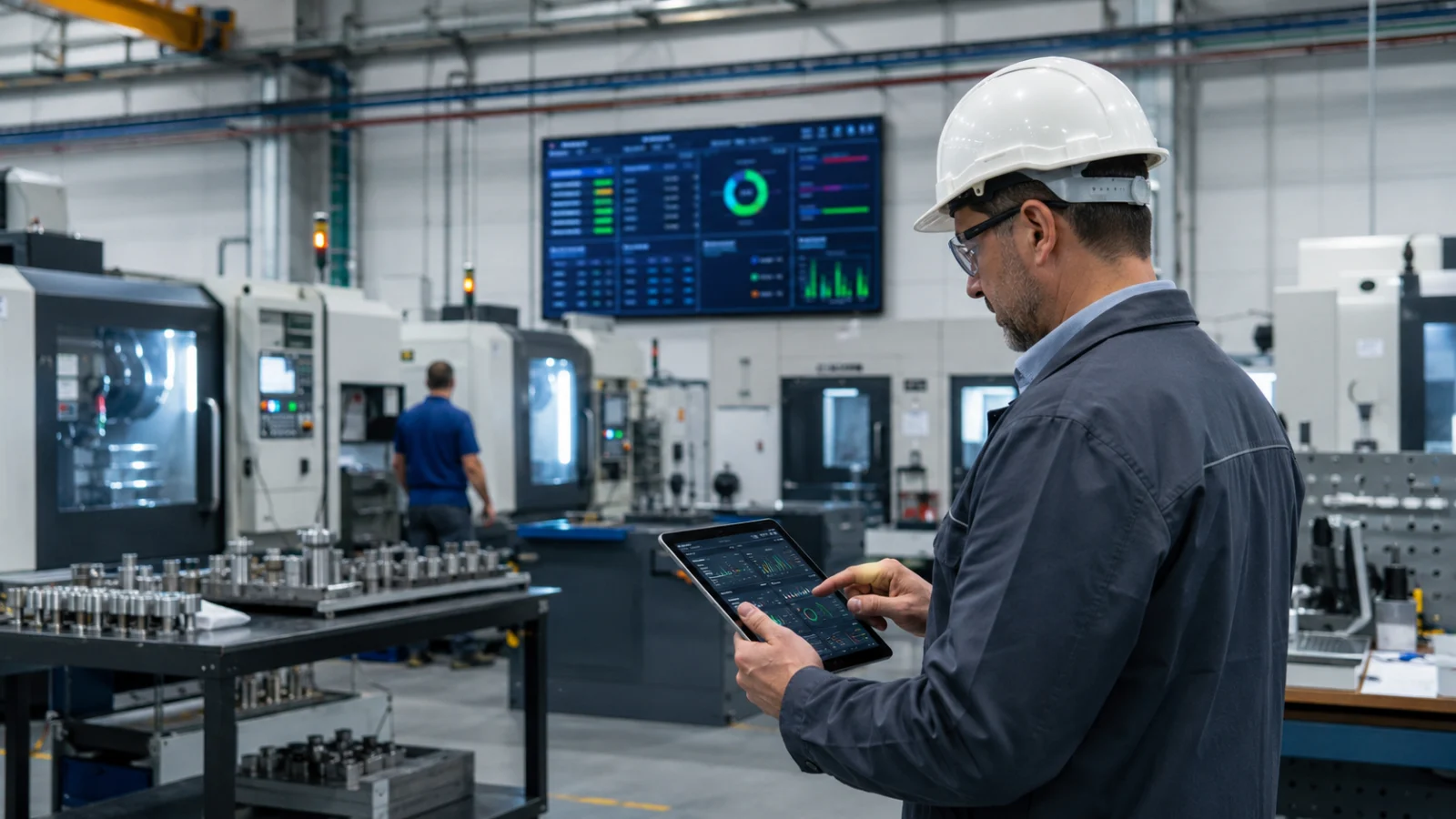
Operator watching the live production board on a tablet on the shop floor

THE FLOOR KEEPS ITS OWN RECORD

The terminal in the operator's hand and the board on the wall are two faces of the same work order.

THE LIFE OF A WORK ORDER ON THE FLOOR

It reaches the floor, reads the truth and ties back to the order.

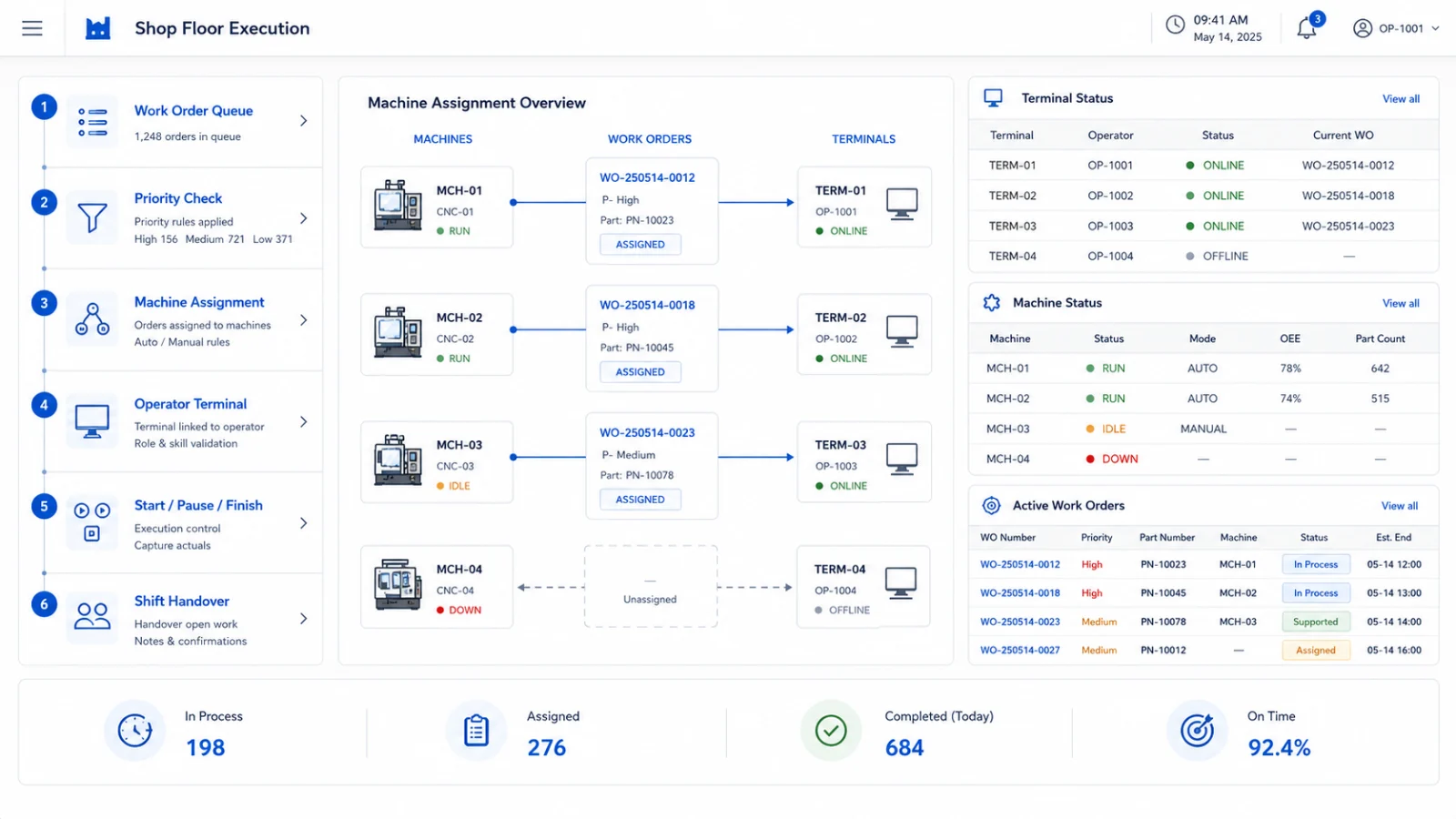
Shop Floor Execution — machine, work order and terminal assignment screen
01

Push to the floor

The work order flows from planning to the station terminal; the operator sees the sequence, recipe and target quantity on their own screen. The paper job card disappears.

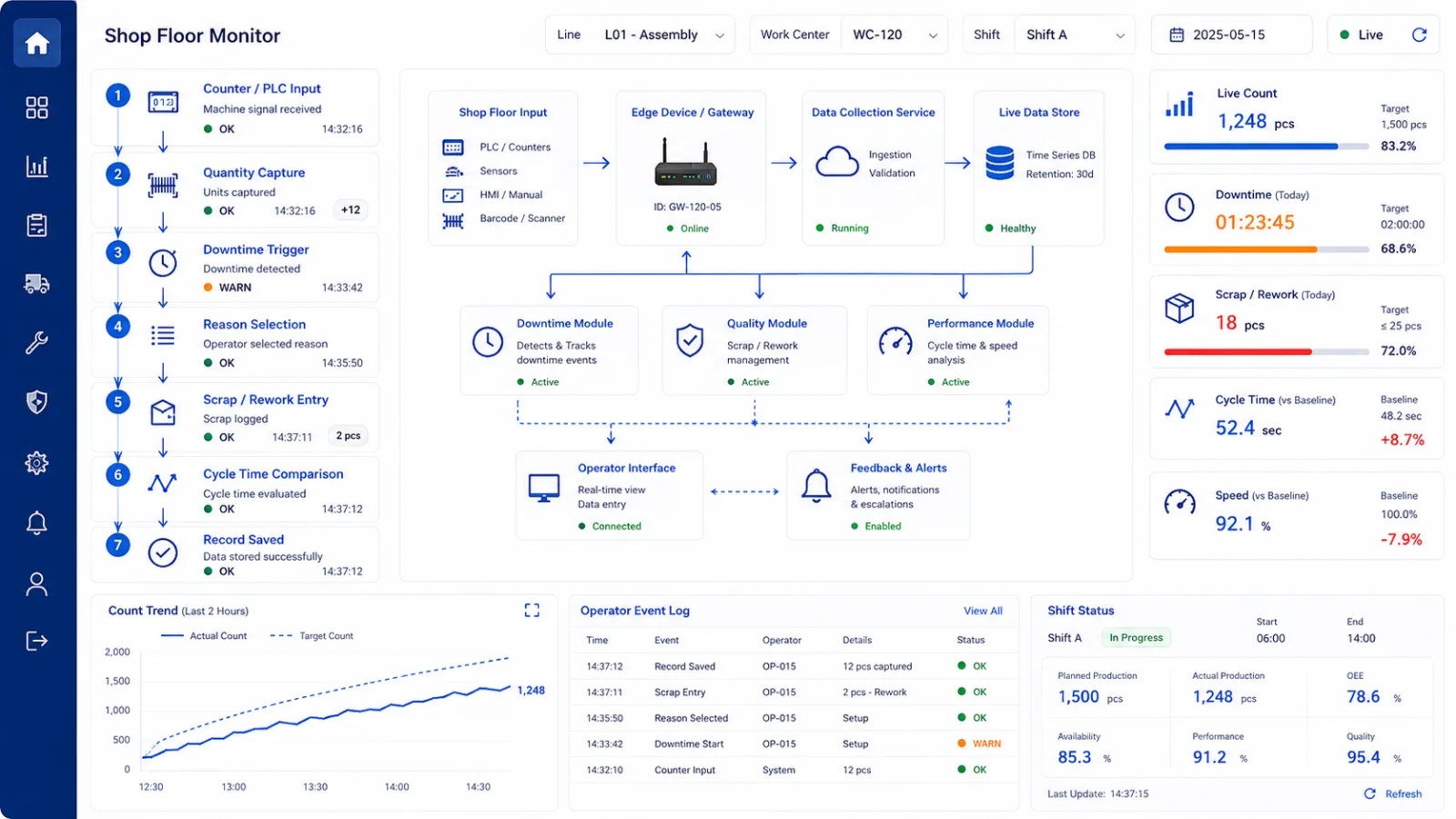
Live machine and production reading screen
02

Read from the floor

Output counter, speed, downtime and waste are read live from the automation layer. The gap between planned and actual is visible the moment it forms.

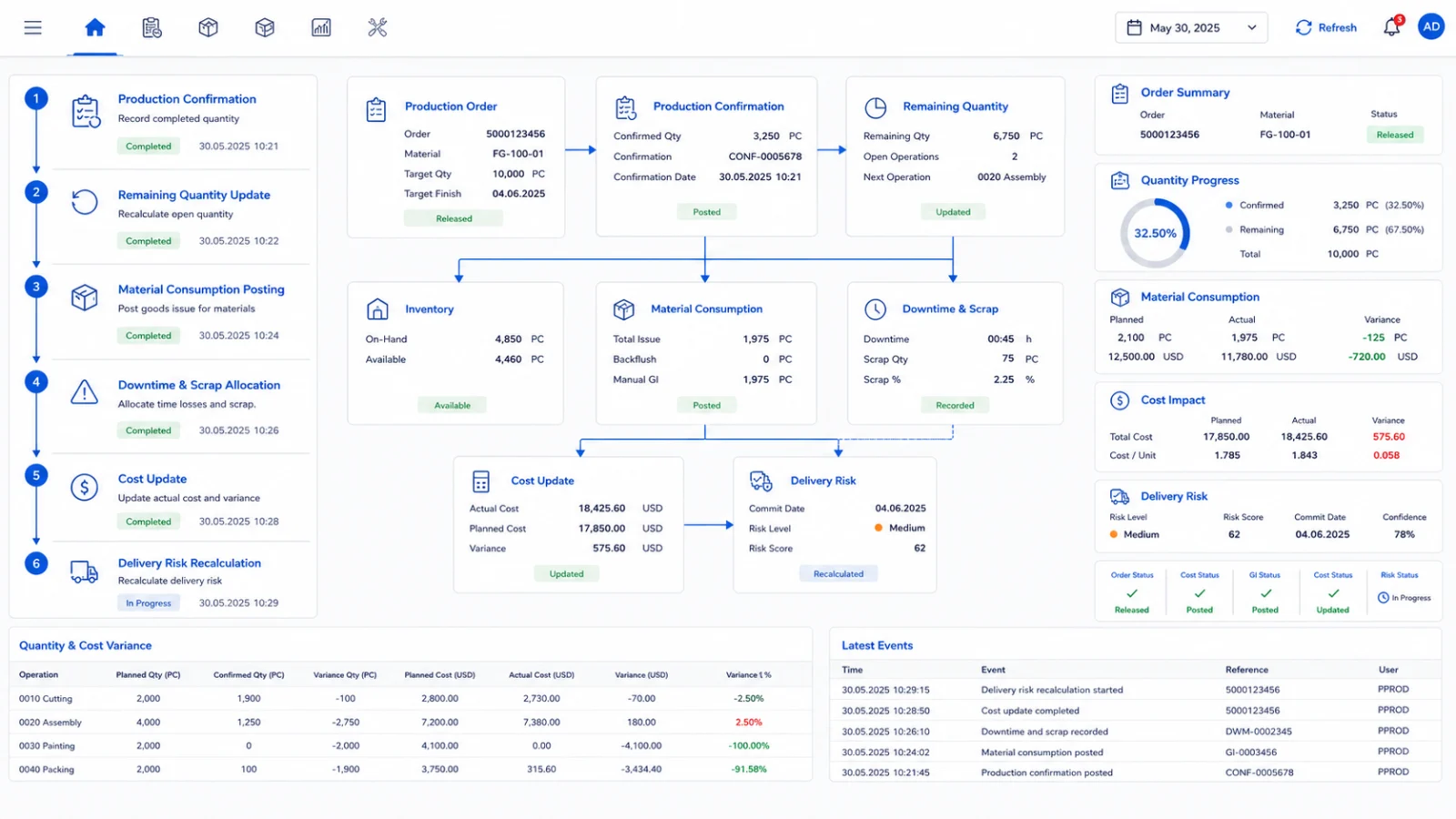
Work order to sales order linking screen
03

Tie it to the order

Actual quantity, consumption and waste are written to the work order and the customer order. Cost and delivery dates rest on reality from the floor.

LIVE SHOP-FLOOR BOARD

Every station reports what it is doing right now.

STATION · WORK ORDERSTATUSPROGRESSOEEOPERATOR
KBA Rapida 162 · OffsetWO-40218 · Kraft bag Running 12,400/19,500 88% M. Demir
Lamination L6WO-40218 · cellophane Running 9,850/19,500 81% E. Çetin
Bobst Mastercut 145WO-40221 · box die-cut Downtime 3,100/12,000 64% S. Kaya
Omega Allpro 165 · GluingWO-40216 · bag forming Running 15,700/18,000 79% H. Acar
Pallet & PackingWO-40212 · dispatch prep Waiting — 58% T. Öz
* Sample structure — demo data. Progress and OEE are read live from the automation layer.

THE WORK ORDER CYCLE

From plan to record, one cycle.

01

Plan

The work order is created from planning; sequence, recipe and target are set.

02

Push to the floor

The work order lands on the station terminal; the operator sees what to run.

03

Read the truth

Output, downtime, waste and consumption are read live from the machine.

04

Write it to the order

Actual data posts to the work order and to cost; the loop closes.

COMPANY TRANSFORMATION STEPS

It starts with data collection and continues with enterprise automation.

Moving to MES does not happen in one step. The tiers below start at the bottom; each level builds on the one before it and lifts the company's maturity a step higher.

07 Enterprise automation End-to-end connected production; Industry 4.0 / 5.0 maturity.
06 Process automation Repetitive approvals, entries and triggers are handed over to the system itself.
05 Taking action Action is taken the moment a variance appears; the decision does not wait for the end of the shift.
04 Bringing operational and administrative units together Shop floor, planning, procurement and finance work on the same record chain.
03 Producing the reports Collected data turns into OEE, waste and cost reports.
02 Integration with existing systems ERP, accounting and existing software share the same data with MES.
01 Data collection Data is read automatically from machine counters, PLCs, encoders or Intelligent IO cards and recorded in the ERP.

01 STARTS WITH DATA COLLECTION AND CLIMBS FROM THERE
PLATFORM CAPABILITIES THAT COMPLETE MES

Data from the floor feeds every layer of the platform.

NEXT SOLUTION · MRP / MRP II

Reality on the floor keeps the plan continuously current.

Request a demo

← Home